


SLEEP APNEA PHENOTYPE DEFINITION USING MULTI-TASK DEEP LEARNING AND EXPLAINABLE ARTIFICIAL INTELLIGENCE
Executive summary
The problem
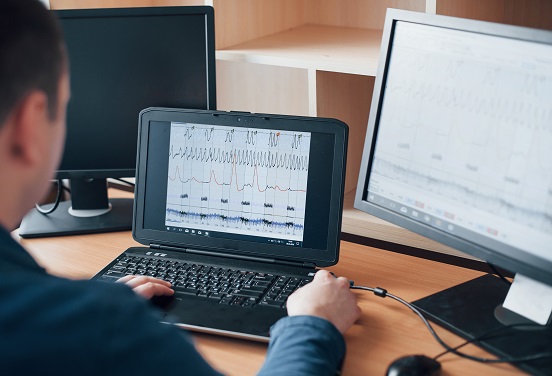
Obstructive sleep apnea (OSA) is a chronic disease characterized by recurrent episodes of absence or reduction of airflow during sleep, causing transient hypoxemia and arousals. This condition is associated with increased sympathetic activity, repeated oxygen desaturations, and sleep fragmentation, leading to cardiovascular, metabolic, and neurocognitive problems. OSA has a high prevalence, being nocturnal polysomnography (PSG) the gold standard test for diagnosis. This test monitors multiple signals to estimate the apnea-hypopnea index (AHI), which determines the presence and severity of OSA.
However, OSA is a heterogeneous disorder with diverse predisposing factors, pathophysiological mechanisms, clinical presentations, and health outcomes. Patients with a similar AHI may have very different underlying causes, symptoms, and prognoses. This suggests the existence of different phenotypes of OSA, which are more homogeneous subtypes of the disease. Identifying these phenotypes is crucial for developing personalized diagnostic and treatment strategies.
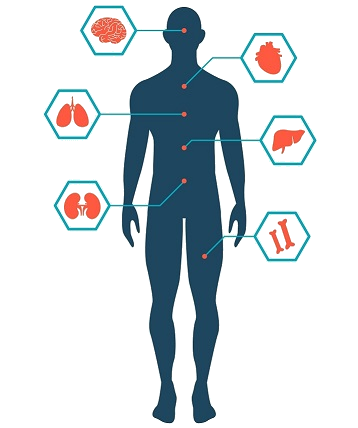

OSA affects 13%-33% of adult men and 6%-19% of women worldwide. However, OSA is an underdiagnosed disease, with estimates suggesting that the actual number of patients could double
Hypothesis
Previous studies suggest the presence of different OSA phenotypes related to comorbidities, which in turn may explain the relatively high proportion of OSA cases that do not respond, or only partially respond, to OSA treatment. Despite this preliminary evidence using machine learning techniques, the delineation of these phenotypes remains challenging, probably due to the limitations associated with conventional feature-engineering methods.
Emerging approaches in multitask deep learning combined with new techniques in Explainable Artificial Intelligence (XAI), applied to the information collected during the PSG procedure, can delineate new OSA phenotypes linked to various comorbidities and variations in treatment effectiveness.
Can new OSA phenotypes related to different comorbidities and variations in treatment effectiveness be defined using multitask deep learning approaches and XAI techniques applied to information obtained from PSG?

Main objective
The main objective of the project is to design, evaluate, and interpret deep learning-based solutions to accurately define new clinically relevant OSA phenotypes from information collected during PSG. It is proposed to use multitask strategies to train algorithms capable of detecting cardiovascular, cognitive, and sleepiness-related morbidities in OSA patients. In addition, XAI methods will be implemented to identify physiological patterns related to these morbidities, thus enabling the definition of phenotypes.
Specific objectives
To design, develop, and optimize high-performance models to detect OSA and its comorbidities based on DL approaches and new MTL strategies
Initially, the following DL algorithms will be assessed: (i) CNNs, including residual connections and attention mechanisms; (ii) RNNs; (iii) Transformers; and (iv) a combination of CNNs with RNNs and transformers, based on pre-trained CNNs. Furthermore, the following MTL architectures and optimization strategies will be initially explored: (i) shared-trunk; (ii) cross-stitch; (iii) Prediction distillation; (iv) soft parameter sharing; and (v) loss weighting.
To detect new patterns/attributes inherent to PSG (signals, clinical, and sociodemographic data) linked to OSA co-morbidities
XAI algorithms enable the identification of paramount information, such as patterns within a raw signal, that elucidates predictions, particularly those derived from DL methods. As an initial proposal, we will use the following approaches: (i) SHAP; (ii) Grad-CAM.
To identify OSA phenotypes at hig risk for cardiovascular, cognitive, and/or hypersomnolence morbidity
Utilizing the inputs (e.g., signals) relevance derived from XAI for each OSA co-morbidity, we will delineate phenotypes through a supervised approach. As a starting point, we will employ SHAP clustering.
To assess treatment effectiveness of sleepiness and neurocognitive-related phenotypes
Taking advantage of the PSGs and the information from the APPLES database, we will evaluate the long-term effectiveness of CPAP therapy on sleepiness and neurocognitive function for each phenotype. For this, statistical correlation analyses will be used over the longitudinal data.
Responsible team

The Biomedical Engineering Group (GIB) at the University of Valladolid is a research group primarily composed of engineers and physicians from various specialties (pulmonology, ophthalmology, neurology, neurophysiology, and psychiatry), who work collaboratively on different research lines. In particular, it has extensive experience in polysomnographic signal analysis to support the diagnosis of OSA. The multiple projects in which it has participated and its growing high-impact scientific output endorse the group's strong research capabilities.

Roberto Hornero Sánchez
Founder & Coordinator

Gonzalo C. Gutiérrez Tobal
Associate Professor
Project tasks
- Organization of polysomnographic databases
- Bibliographic review of automatic methods
- Implementation of selected automatic methods
- Automatic OSA phenotype definitions
- Statistical comparison of methods, discussion and drawing of conclusions
- Dissemination and transfer of results
- Management and coordination
Publications
Articles in indexed journals
Javier Gomez-Pilar, Fernando Vaquerizo-Villar, David García Azorín, Álvaro Sierra, Ángel Luis Guerrero, Roberto Hornero Algometric assessment of sensitization and habituation as predictive markers for onabotulinumtoxina response in chronic migraine, Pain Medicine, 2026, DOI: 10.1093/pm/pnag060
Fernando Vaquerizo-Villar, Roberto Hornero, David Gozal, Gonzalo C. Gutiérrez-Tobal, Baha Al-Shawwa, Zarmina Ehsan Using Neural Networks to Complement Oximetry in Infant Obstructive Sleep Apnea: Working on Baby Steps, Sleep, 2026, DOI: 10.1093/sleep/zsag092
Máximo Domínguez-Guerrero, Daniel Álvarez, Verónica Barroso-García, María Fernández-Vaquerizo, Tomás Ruiz-Albi, Roberto Hornero Early prediction of longitudinal treatment adherence in obstructive sleep apnea using machine learning approaches, Biodata Mining, 2026, DOI: 10.1186/s13040-026-00554-0
Clara García-Vicente, Gonzalo C. Gutiérrez-Tobal, Fernando Vaquerizo-Villar, Adrián Martín-Montero, David Gozal, Roberto Hornero Combined explainable deep learning model to predict pediatric sleep apnea from ECG and SpO2, Measurement, vol. 264, March, 2025, DOI: 10.1016/j.measurement.2025.120259
María Herrero-Tudela, Roberto Romero-Oraá, Gonzalo C. Gutiérrez-Tobal, Roberto Hornero, María I. López, Pere Romero-Aroca, María García DDFU-Net: A Deep Decoder-Focused U-Net Model for Retinal Lesion Segmentation, Annals of Biomedical Engineering, 2026, DOI: 10.1007/s10439-026-04032-w
Fernando Vaquerizo-Villar, Tamara Hernandez-Beeftink, María Heredia-Rodríguez, Esther Gómez-Sánchez, Mario Lorenzo-López, Rocío López-Herrero, Miguel Bardaji-Carrillo, Álvaro Tamayo-Velasco, Marta Martín-Fernández, Laura Sánchez-de-Prada, Julián Álvarez-Escudero, Sonia Veiras, Aurora Baluja, Hugo Gonzalo-Benito, Pedro Martínez-Paz, Adrián García-Concejo, Amanda Fernández-Rodríguez, María A. Jiménez-Sousa, Salvador Resino, Laura Martínez-Campelo, Eva Suárez-Pajés, Inés Quintela, Raquel Cruz, Ángel Carracedo, Jesús Villar, Carlos Flores, Roberto Hornero and Eduardo Tamayo, Identifying sepsis susceptibility genes in post-surgical patients using an artificial intelligence approachtion, Frontiers in Medicine, vol. 12, December, 2025, DOI: 10.3389/fmed.2025.1644800
Fernando Vaquerizo-Villar, Gonzalo C. Gutiérrez-Tobal, Daniel Álvarez, Adrián Martín-Montero, David Gozal, Roberto Hornero, An explainable deep learning approach for sleep staging in sleep apnea patients across all age subgroups from pulse oximetry signals, Engineering Applications of Artificial Intelligence, vol. 162, part C, December, 2025, DOI: 10.1016/j.engappai.2025.112562
Verónica Barroso-García, Fernando Vaquerizo-Villar, Gonzalo C. Gutiérrez-Tobal, Ehab A. Dayyat, David Gozal, Timo Leppänen, Roberto Hornero, An explainable deep-learning approach to detect pediatric sleep apnea from single-channel airflow, IEEE Journal of Translational Engineering in Health and Medicine-Jtehm, vol. 13, pp. 517-531, 2025, DOI: 10.1109/JTEHM.2025.3625388
Roberto Romero-Oraá, María Herrero-Tudela, María I. López, Roberto Hornero, Pere Romero-Aroca, María García, An Ensemble Model for Fundus Images to Aid in Age-Related Macular Degeneration Grading, Diagnostics, vol. 15 (20), pp. 2644, 2025, DOI: 10.3390/diagnostics15202644
Enrique Gurdiel, Fernando Vaquerizo-Villar, Javier Gomez-Pilar, Gonzalo C. Gutiérrez-Tobal, Félix del Campo, and Roberto Hornero, Beyond the Ground Truth, XGBoost Model Applied to Sleep Spindle Event Detetion, IEEE Journal of Biomedical and Health Informatics, vol. 29, NO. 7, Julio, 2025, DOI: 10.1109/JBHI.2025.3544966
Fernando Vaquerizo-Villar, and Verónica Barroso-García, Special Issue: “Artificial Intelligence for Biomedical Signal Processing”, Bioengineering, 2025, 12, 753, DOI: 10.3390/bioengineering12070753
César Vaca, Jesús-Ángel Román-Gallego, Verónica Barroso-García, Fernando Tejerina, Benjamín Sahelices, Special Issue: “Concatenation Augmentation for Improving Deep Learning Models in Finance NLP with Scarce Data”, Electronics, 2025, vol. 14 (11), pp. 2289, DOI: 10.3390/electronics14112289
Adrián Martín-Montero, Fernando Vaquerizo-Villar, Clara García-Vicente, Gonzalo C. Gutiérrez-Tobal, Thomas Penzel, Roberto Hornero, Heart rate variability analysis in comorbid insomnia and sleep apnea (COMISA), Scientific Reports, vol. 15 (17574), Mayo, 2025, DOI: 10.1038/s41598-025-02541-7
Teresa Arora, Fernando Vaquerizo-Villar, Roberto Hornero, David Gozal, Sleep irregularity is associatedwith night-time technology,dysfunctional sleep beliefs andsubjective sleep parametersamongst female universitystudents, Scientific Reports, 15, 1, 12, February, 2025, DOI: 10.1038/s41598-025-90720-x
Communications in international conferences

Javier Gomez-Pilar, Adrián Martín-Montero, Fernando Vaquerizo-Villar, Máximo Domínguez-Gerrero, Daniela Ferreira-Santos, Pedro Pereira-Rodrigues, David Gozal, Roberto Hornero, Gonzalo C. Gutiérrez-Tobal, Phenotypic Characterization of Sleep Apnea Using Clusters Derived from Subject-Based SpO2 Weighted Correlation Networks, 47th Annual International Conference of the IEEE Engineering in Medicine and Biology Society (EMBC 2025), ISBN: 979-8-3315-8618-8, Copenhague (Dinamarca), Julio 14 - Julio 17, 2025, DOI: 10.1109/EMBC58623.2025.11254554
Clara García-Vicente, Gonzalo C. Gutiérrez-Tobal, Javier Gomez-Pilar, Fernando Vaquerizo-Villar, Adrián Martín-Montero, Máximo Domínguez-Gerrero, David Gozal, Roberto Hornero, Explainable Hybrid Convolutional and Transformer Network for Pediatric Sleep Apnea Diagnosis Using Nocturnal Oximetry, 47th Annual International Conference of the IEEE Engineering in Medicine and Biology Society (EMBC 2025) , ISBN: 979-8-3315-8618-8, Copenhague (Dinamarca), Julio 14 - Julio 17, 2025, DOI: 10.1109/EMBC58623.2025.11254523
Communications in national conferences
Máximo Domínguez-Guerrero, Daniel Álvarez, Verónica Barroso-García, María Fernández-Vaquerizo, Fernando Moreno, Julio de Frutos, Félix del Campo, Roberto Hornero, Optimización del período de telemonitorización inicial en la predicción temprana de la adherencia al tratamiento en pacientes con apnea obstructiva del sueño empleando técnicas de Machine Learning, XXXIV Reunión Anual de la Sociedad Española de Sueño 2026 , Granada (España), 5 Marzo - 7 Marzo, 2026
Beatriz Pascual-Roa, Víctor Rodríguez-González, Eduardo Santamaría-Vázquez, Víctor Martínez-Cagigal, Roberto Hornero, MEDUSA© Analyzer: Una interfaz gráfica de código abierto validada para el análisis avanzado de M/EEG, XLIII Congreso Anual de la Sociedad Española de Ingeniería Biomédica (CASEIB 2025), ISBN: 979-8-3315-8618-8, ISBN: 978-84-09-80259-3, pp. 225-228, Zaragoza (España), 19 Noviembre - 21 Noviembre, 2025, URI:
Máximo Domínguez-Guerrero, Daniel Álvarez, Verónica Barroso-García, María Fernández-Vaquerizo, Fernando Moreno, Julio de Frutos, Félix del Campo, Tomás Ruiz-Albi, Roberto Hornero, Influencia del periodo de telemonitorización inicial en la predicción temprana de la adherencia al tratamiento en pacientes con apnea obstructiva del sueño, XLIII Congreso Anual de la Sociedad Española de Ingeniería Biomédica (CASEIB 2025), ISBN: 978-84-09-80259-3, Zaragoza (España), 19 Noviembre - 21 Noviembre, 2025, URI:
Adrián Martín-Montero, Gonzalo C. Gutiérrez-Tobal, Clara García-Vicente, Máximo Domínguez-Guerrero, Daniela Ferreira-Santos, Pedro Pereira-Rodrigues, David Gozal, Roberto Hornero, Javier Gomez-Pilar, Identifying Clinically Relevant OSA Phenotypes using HRV and Subject-Based Weighted Correlation Network Analysis, XLIII Congreso Anual de la Sociedad Española de Ingeniería Biomédica (CASEIB 2025), ISBN: 978-84-09-80259-3, Zaragoza (España), 19 Noviembre - 21 Noviembre, 2025, URI:
Verónica Barroso-García, Fernando Vaquerizo-Villar, Gonzalo C. Gutiérrez-Tobal, Ehab Dayyat, David Gozal, Timo Leppänen, Roberto Hornero, An explainable deep-learning approach to detect pediatric sleep apnea from single-channel airflow, 17.as Jornadas de Personal Investigador Joven CIBERES-CIBER-BBN 2025, ISBN: 2659-6636, pp. 100543, El Escorial (España), 6 Noviembre - 7 Noviembre, 2025, DOI: 10.1016/j.opresp.2026.100538

Fernando Vaquerizo-Villar, Verónica Barroso-García, Daniel Álvarez, Gonzalo C. Gutiérrez-Tobal, Javier Gomez-Pilar, Adrián Martín-Montero, Jorge Jiménez-García, Clara García-Vicente, Tomás Ruiz-Albi, Félix del Campo, Roberto Hornero, Track Record and Capabilities of the Biomedical Engineering Group at the University of Valladolid in Respiratory Disease Research, 17.as Jornadas de Personal Investigador Joven CIBERES-CIBER-BBN 2025, ISBN: 2659-6636, pp. 100543, El Escorial (España), 6 Noviembre - 7 Noviembre, 2025, DOI: 10.1016/j.opresp.2026.100543
Clara García-Vicente, Gonzalo C. Gutiérrez-Tobal, Adrián Martín-Montero, Máximo Domínguez-Guerrero, David Gozal, Roberto Hornero, Protocolo de cribado de la apnea del sueño pediátrica mediante un método de Deep Learning utilizando señales nocturnas de ECG y SpO2, 58º Congreso de la Sociedad Española de Neumología y Cirugía Torácica (SEPAR), pp. 523-524, Bilbao (España), 12 Junio - 14 Junio, 2025, DOI: 10.1016/S2659-6636(25)00112-2
Adrián Martín-Montero, Clara García-Vicente, Máximo Domínguez-Guerrero, Félix del Campo, Daniel Álvarez, Gonzalo C. Gutiérrez-Tobal, Roberto Hornero, Análisis no lineal de la variabilidad de la frecuencia cardíaca en pacientes con comorbilidad de insomnio y apnea del sueño (COMISA), 58º Congreso de la Sociedad Española de Neumología y Cirugía Torácica (SEPAR), pp. 490-491, Bilbao (España), 12 Junio - 14 Junio, 2025, DOI: 10.1016/S2659-6636(25)00112-2
Related news


Contact
Biomedical Engineering Group
-
 Roberto Hornero Sánchez
-
Gonzalo César Guitierrez Tobal
-
 Paseo Belén 15 - CP. 47011 Valladolid, España
-
 Tlfn +34 983 18 5570