image
PROJECT

NET4SLEEP

DINAMIZACIÓN DE UNA RED I+D+i COLABORATIVA TRANSFRONTERIZA PARA EL FENOTIPADO INTEGRAL DE LA APNEA DEL SUEÑO

partner
Project description

Executive Summary

The problem

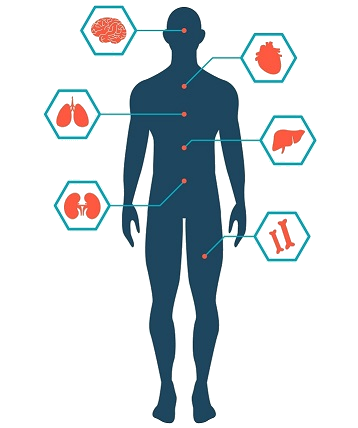
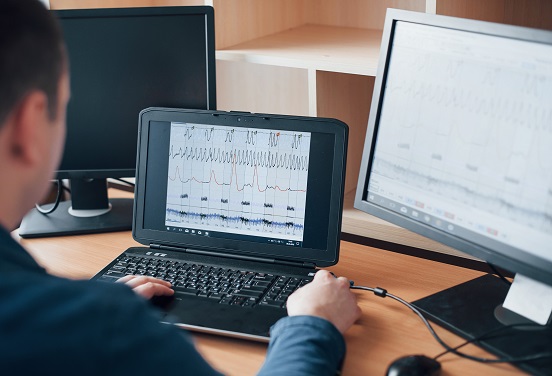
Obstructive sleep apnea (OSA) is a highly prevalent condition in Western countries, associated with reduced quality of life, cardiovascular and metabolic morbidities, among others. Nocturnal polysomnography (PSG) monitors various body systems during sleep and is the standard method used to determine the presence and severity of OSA.

Substantial discrepancies between PSG results and the presence of comorbidities suggest the existence of different phenotypes of the disease. These phenotypes, not yet fully defined, could be identified through the combined information from sociodemographic, clinical, and anthropometric characteristics, as well as data extracted from various nocturnal biomedical signals recorded during PSG.
img
icon
Between the Northern region of Portugal and Castilla y León, the number of patients diagnosed with OSA is approximately half a million. However, OSA is an underdiagnosed condition, with the actual number of patients estimated to be double
Hypothesis
img

OSA phenotyping has never been systematically implemented in clinical practice, leaving room for improvement in the personalization of healthcare services provided.

The identification of new phenotypes of OSA is possible through the combination of sociodemographic and anthropometric variables with an in-depth analysis of the nocturnal signals recorded during PSG.

Is it possible to define a clinical protocol for the automatic identification of OSA phenotypes that combines information derived from PSG analysis with data from demographic, clinical, and anthropometric variables?

icon

Main objective

The general objective of the project is to stimulate a cross-border collaborative R&D network for the collection and analysis of information necessary to define new clinically useful phenotypes of obstructive sleep apnea associated with various comorbidities.

Specific objectives

01

Obtain the clinical, demographic, and anthropometric data, as well as the polysomnographic signal records of the individuals participating in the study.

To carry out data collection from participants, the four consortium members will collaborate following a sampling strategy aimed at ensuring the participation of a total of 600 subjects (50% in Porto and 50% in Valladolid).

02

To evaluate the clinical, demographic, and anthropometric data, as well as the polysomnographic signal records for their characterization according to the different OSA groups.

The profiles of the participants will be obtained from the collected data, on one hand, through the analysis of clinical, demographic, and anthropometric data, and on the other hand, through the processing and characterization of polysomnographic signals.

03

To define new clinically useful phenotypes of obstructive sleep apnea associated with different comorbidities and levels of treatment effectiveness.

New OSA phenotypes will be defined to provide better and more effective, personalized, and patient-adapted treatment through three actions: i) the identification of the most useful characteristics for phenotyping based solely on clinical, demographic, and anthropometric information; ii) the determination of the most useful characteristics for phenotyping based solely on information derived from polysomnographic signals; and iii) the identification of phenotypes based on the characteristics that have been determined to be most relevant in the first two actions.

04

To design the automatic tool to identify the specific phenotype of each patient, assisting in the diagnosis of OSA

The design of the automatic tool will be carried out to identify the specific phenotype of each patient, based on the combination of clinical, anthropometric, and demographic information, as well as polysomnographic signals.

05

To analyze the results obtained and draw conclusions

An integral assessment of the results obtained will be carried out, with particular attention to the feasibility of transferring the actions derived from the project, analyzing the characteristics of comprehensive phenotyping and diagnostic tools in routine practice.

Partnership

The Biomedical Engineering Group (GIB) at the University of Valladolid is a research group primarily composed of engineers and doctors from various specialties (pulmonology, ophthalmology, neurology, neurophysiology, and psychiatry), who work together on different research lines. In particular, it has extensive experience in the analysis of polysomnographic signals to assist in the diagnosis of OSA. The multiple projects it has participated in and its growing scientific production of high impact demonstrate the group's strong research capabilities.


cover

Gonzalo C. Gutiérrez Tobal

Associate Professor

cover

Javier Gómez Pilar

Senior lecturer

gib.tel.uva.es

The Faculty of Medicine of the University of Porto (FMUP) is one of the most prestigious higher education institutions in Portugal, both nationally and internationally. FMUP has supported 250 clinical trials and produced over 6,000 articles in journals indexed on the Web of Science. It is home to the R&D unit Health Technologies and Services Research Center (CINTESIS), with extensive experience in the analysis of clinical, demographic, and anthropometric data of patients with OSA.

cover

Pedro Pereira Rodrigues

Co-principal investigator of CINTESIS

cover

Daniela Ferreira Santos

Co-principal investigator of CINTESIS

cintesis.eu

The Regional Health Management of Castilla y León (GRS) is the organization responsible for managing public health services and healthcare in the autonomous community of Castilla y León. Among its main functions is promoting scientific research and the application of new technologies in the healthcare sector. It is the cornerstone for providing public healthcare services in Castilla y León, ensuring the well-being and health of its citizens. Similarly, the Río Hortega University Hospital (HURH) has adequate technical resources for the project, such as laboratories and a sleep unit.

cover

Tomás Ruiz Albi

Head of the Pulmonology Unit at HURH

saludcastillayleon.es

The Centro Hospitalar Universitário de São João (CHUSJ) is a national reference center in 15 distinct areas and a member of 7 European reference networks. Its professionals participate in clinical, epidemiological, and laboratory research studies in accordance with good clinical practices and current legislation. Its members have extensive experience in the diagnosis of OSA and the clinical manifestation of different subgroups within the disease.

cover

Marta Drummond

Neumologist at CHUSJ

portal-chsj.min-saude.pt
Project work plan

List of activitys

During this activity, data will be collected from the participants involved in the study, totaling 600 subjects, with 50% registered in Porto and 50% in Valladolid. This activity is considered one of the most critical phases of the project, involving the development of three parallel actions in the two territorial areas of execution:

  • Recruitment of subjects and ethical aspects
  • Conducting polysomnographies and data collection
  • Storage

In this activity, the profiles of the participants will be obtained from the data collected in the previous activity. Thus, activity 2, along with activity 3, are presented as the most technical phases of the project. To carry it out, once the data is obtained, two actions are considered:

  • Analysis of clinical, demographic, and anthropometric data
  • Processing of polysomnographic signals

During this activity, OSA phenotypes will be defined to provide better and more effective, personalized, and patient-adapted treatment. To develop this activity, three actions are considered:

  • Determination of the most relevant clinical, demographic, and anthropometric characteristics for OSA phenotyping.
  • Determination of characteristics derived from polysomnographic signals, enabling a thorough characterization of these signals with relevant information to assist in the phenotyping of the disease.
  • Identification of OSA phenotypes, providing a final selection of the characteristics that make up the comprehensive phenotyping, combining the characteristics derived from the previous two actions.

During this activity, the design of the automatic tool to identify the specific phenotype of each patient will be carried out, based on the combination of clinical, demographic, and anthropometric information with polysomnographic signals. Additionally, the foundations for future exploitation of the tool will be established, and final assessments will be made regarding the analyses derived from the project. This activity thus represents the closure of the technical execution phase of the project, involving three actions:

  • Analysis of the characteristics of the comprehensive phenotyping, identifying specific profiles for the different severities of the disease.
  • Design of the automatic characterization tool.
  • Conclusions and transfer, providing the final assessment of the project.

This activity is intended to manage and coordinate the other proposed activities, thus taking place throughout the execution of the project, and involving three distinct actions:

  • Coordination and supervision of Activities 1 and 2.
  • Coordination and supervision of Activities 3 and 4.
  • Execution of the contingency plan, identifying risks, their scope, and potential solutions.

The final activity of the project focuses on the dissemination, communication, and visibility of the results achieved during the project's execution, in a transparent and accessible manner, both for the scientific community and society. Three types of actions are distinguished, referring to different dissemination strategies for the results:

  • Participation in conferences.
  • Preparation and publication of scientific articles.
  • Other communication strategies, such as the creation of dissemination materials to inform society about the progress made.

Publications derived from the project

Artículos en revistas indexadas

Francisca Gomes-Almeida, Adrián Martín-Montero, Gonzalo C. Gutiérrez-Tobal, Javier Gomez-Pilar, Roberto Hornero, Pedro Pereira-Rodrigues, Pedro Amorim, Matilde Monteiro-Soares, Daniela Ferreira-Santos, The Potential of Clustering Methods for Pre-Test Triage in Sleep Medicine: A Systematic Review, Sleep Medicine Reviews, vol. 275, Mayo, 2026, DOI: 10.1016/j.cmpb.2025.109209

Máximo Domínguez-Guerrero, Daniel Álvarez, Verónica Barroso-García, María Fernández-Vaquerizo, Tomás Ruiz-Albi, Roberto Hornero, Early prediction of longitudinal treatment adherence in obstructive sleep apnea using machine learning approaches, Biodata Mining, Abril, 2026, DOI: 10.1186/s13040-026-00554-0

Margarida Carvalho, Eva Almeida, Pedro Amorim, Marta Drummond, Adrián Martín-Montero, Gonzalo C. Gutiérrez-Tobal, Tomás Ruiz-Albi, Julio de Frutos, Pedro Pereira-Rodrigues, Daniela Ferreira-Santos, Physiological and Sleep Profiles in Insomnia, OSA, and COMISA: A Comparative Study in Portugal and Spain, Journal of Sleep Research, vol. 275, Abril, 2026, DOI: 10.1016/j.cmpb.2025.109209

Clara García-Vicente, Gonzalo C. Gutiérrez-Tobal, Fernando Vaquerizo-Villar, Adrián Martín-Montero, David Gozal, Roberto Hornero, Combined explainable deep learning model to predict pediatric sleep apnea from ECG and SpO2, Measurement, vol. 264, Marzo, 2026, DOI: 10.1016/j.measurement.2025.120259

Gonzalo C. Gutiérrez-Tobal, Javier Gomez-Pilar, Daniela Ferreira-Santos, Pedro Pereira-Rodrigues, Daniel Álvarez, Félix del Campo, David Gozal, Roberto Hornero, A subject-based association network defines new pediatric sleep apnea phenotypes with different odds of recovery after treatment, Computer Methods and Programs in Biomedicine, vol. 275, Febrero, 2026, DOI: 10.1016/j.cmpb.2025.109209

Fernando Vaquerizo-Villar, Gonzalo C. Gutiérrez-Tobal, Daniel Álvarez, Adrián Martín-Montero, David Gozal, Roberto Hornero, An explainable deep learning approach for sleep staging in sleep apnea patients across all age subgroups from pulse oximetry signals, Engineering Applications of Artificial Intelligence, vol. 162, Diciembre, 2025, DOI: 10.1016/j.engappai.2025.112562

Verónica Barroso-García, Fernando Vaquerizo-Villar, Gonzalo C. Gutiérrez-Tobal, Ehab A. Dayyat, David Gozal, Timo Leppänen, Roberto Hornero, An explainable deep-learning approach to detect pediatric sleep apnea from single-channel airflow, IEEE Journal of Translational Engineering in Health and Medicine-Jtehm, vol. 13, Octubre, 2025, DOI: 10.1109/JTEHM.2025.3625388

Enrique Gurdiel, Fernando Vaquerizo-Villar, Javier Gomez-Pilar, Gonzalo C. Gutiérrez-Tobal, Félix del Campo, Roberto Hornero, Beyond the ground truth, XGBoost model applied to sleep spindle event detection, Scientific Reports, vol. 29 (7), Julio, 2025, DOI: 10.1109/JBHI.2025.3544966

Adrián Martín-Montero, Fernando Vaquerizo-Villar, Clara García-Vicente, Gonzalo C. Gutiérrez-Tobal, Thomas Penzel, Roberto Hornero, Heart rate variability analysis in comorbid insomnia and sleep apnea (COMISA), Scientific Reports, vol. 15 (17574), May, 2025, DOI: 10.1038/s41598-025-02541-7

Clara García-Vicente, Gonzalo C. Gutiérrez-Tobal, Fernando Vaquerizo-Villar, Adrián Martín-Montero, David Gozal, Roberto Hornero, SleepECG-Net: explainable deep learning approach with ECG for pediatric sleep apnea diagnosis, IEEE Journal of Biomedical and Health Informatics, vol. 29 (2), February, 2025, DOI: 10.1109/JBHI.2024.3495975

Pedro Amorim, Daniela Ferreira-Santos, Marta Drummond, Pedro Pereira Rodrigues, Prospective Validation and Usability Evaluation of a Mobile Diagnostic App for Obstructive Sleep Apnea, Diagnostics, vol. 14 (22), November, 2024, DOI: 10.3390/diagnostics14222519

Communications in international conferences

Javier Gomez-Pilar, Adrián Martín-Montero, Fernando Vaquerizo-Villar, Máximo Domínguez-Gerrero, Daniela Ferreira-Santos, Pedro Pereira-Rodrigues, David Gozal, Roberto Hornero, Gonzalo C. Gutiérrez-Tobal, Phenotypic Characterization of Sleep Apnea Using Clusters Derived from Subject-Based SpO2 Weighted Correlation Networks, 47th Annual International Conference of the IEEE Engineering in Medicine and Biology Society (EMBC 2025), Copenhague (Denmark), 14 - 17 July, 2025

Clara García-Vicente, Gonzalo C. Gutiérrez-Tobal, Javier Gomez-Pilar, Fernando Vaquerizo-Villar, Adrián Martín-Montero, Máximo Domínguez-Gerrero, David Gozal, Roberto Hornero, Explainable Hybrid Convolutional and Transformer Network for Pediatric Sleep Apnea Diagnosis Using Nocturnal Oximetry, 47th Annual International Conference of the IEEE Engineering in Medicine and Biology Society (EMBC 2025), Copenhague (Denmark), 14 - 17 July, 2025

Eva Almeida, Pedro Pereira Rodrigues, Daniela Ferreira-Santos, Enhancing Obstructive Sleep Apnea Diagnosis: Integrating Automated Detection and Event Duration Analysis, 35th Medical Informatics Europe Conference (MIE2025), Glasgow (Scotland), 19 - 21 May, 2025

Fábio Teixeira, João Costa, Pedro Amorim, Nuno Guimarães, Daniela Ferreira-Santos Automating data extraction from PDF sleep reports using data mining techniques, 35th Medical Informatics Europe Conference (MIE2025), Glasgow (Scotland), 19 - 21 May, 2025

Daniela Ferreira-Santos, Overview of novel digital clinical tools in OSA, 1st International Sleeptech Conference, Valmontone (Italy), 18 - 20 October, 2024

Pedro Amorim, OSABayes: smartphone application for OSA screening, 1st International Sleeptech Conference, Valmontone (Italy), 18 - 20 October, 2024

Communications in national conferences

Adrián Martín-Montero, Gonzalo C. Gutiérrez-Tobal, Clara García-Vicente, Máximo Domínguez-Guerrero, Daniela Ferreira-Santos, Pedro Pereira-Rodrigues, David Gozal, Roberto Hornero, Javier Gomez-Pilar, , Identifying Clinically Relevant OSA Phenotypes using HRV and Subject-Based Weighted Correlation Network Analysis, XLIII Congreso Anual de la Sociedad Española de Ingeniería Biomédica (CASEIB 2025), Zaragoza (España), 19 - 21 Noviembre, 2025

Lidia Enríquez-Meijome, Gonzalo C. Gutiérrez-Tobal, David Gozal, Roberto Hornero, Clara García-Vicente, , StageECG: un enfoque deep learning para detectar las fases del sueño a partir del ECG nocturno de niños con sospecha de apnea obstructiva, XLIII Congreso Anual de la Sociedad Española de Ingeniería Biomédica (CASEIB 2025), Zaragoza (España), 19 - 21 Noviembre, 2025

Máximo Domínguez-Guerrero, Daniel Álvarez, Verónica Barroso-García, María Fernández-Vaquerizo, Fernando Moreno, Julio de Frutos, Félix del Campo, Tomás Ruiz-Albi, Roberto Hornero, , Influencia del periodo de telemonitorización inicial en la predicción temprana de la adherencia al tratamiento en pacientes con apnea obstructiva del sueño, XLIII Congreso Anual de la Sociedad Española de Ingeniería Biomédica (CASEIB 2025), Zaragoza (España), 19 - 21 Noviembre, 2025

Verónica Barroso-García, Fernando Vaquerizo-Villar, Gonzalo C. Gutiérrez-Tobal, Ehab Dayyat, David Gozal, Timo Leppänen, Roberto Hornero, , An explainable deep-learning approach to detect pediatric sleep apnea from single-channel airflow, 17.as Jornadas de Personal Investigador Joven CIBERES-CIBER-BBN 2025, El escorial (España), 6 - 7 Noviembre, 2025

Fernando Vaquerizo-Villar, Verónica Barroso-García, Daniel Álvarez, Gonzalo C. Gutiérrez-Tobal, Javier Gomez-Pilar, Adrián Martín-Montero, Jorge Jiménez-García, Clara García-Vicente, Tomás Ruiz-Albi, Félix del Campo, Roberto Hornero, , Track Record and Capabilities of the Biomedical Engineering Group at the University of Valladolid in Respiratory Disease Research, 17.as Jornadas de Personal Investigador Joven CIBERES-CIBER-BBN 2025, El escorial (España), 6 - 7 Noviembre, 2025

Adrián Martín-Montero, Clara García-Vicente, Máximo Domínguez-Guerrero, Félix del Campo, Daniel Álvarez-González, Gonzalo C. Gutiérrez-Tobal, Roberto Hornero, Análisis no lineal de la variabilidad de la frecuencia cardíaca en pacientes con comorbilidad de insomnio y apnea del sueño (COMISA), 58º Congreso de la Sociedad Española de Neumología y Cirugía Torácica (SEPAR), Bilbao (Spain), 12 - 14 June, 2025

Clara García-Vicente, Gonzalo C. Gutiérrez-Tobal, Adrián Martín-Montero, Máximo Domínguez-Guerrero, David Gozal, Roberto Hornero, Protocolo de cribado de la apnea del sueño pediátrica mediante un método de Deep Learning utilizando señales nocturnas de ECG y SpO2, 58º Congreso de la Sociedad Española de Neumología y Cirugía Torácica (SEPAR), Bilbao (Spain), 12 - 14 June, 2025

Eva Almeida, Pedro Pereira Rodrigues, Daniela Ferreira-Santos, Improving sleep apnea scoring with automated event classification from flow signal analysis , 40º Congresso Sociedade Portuguesa de Pneumologia, Lisbon (Portugal), 14 - 16 November, 2024

Contact